

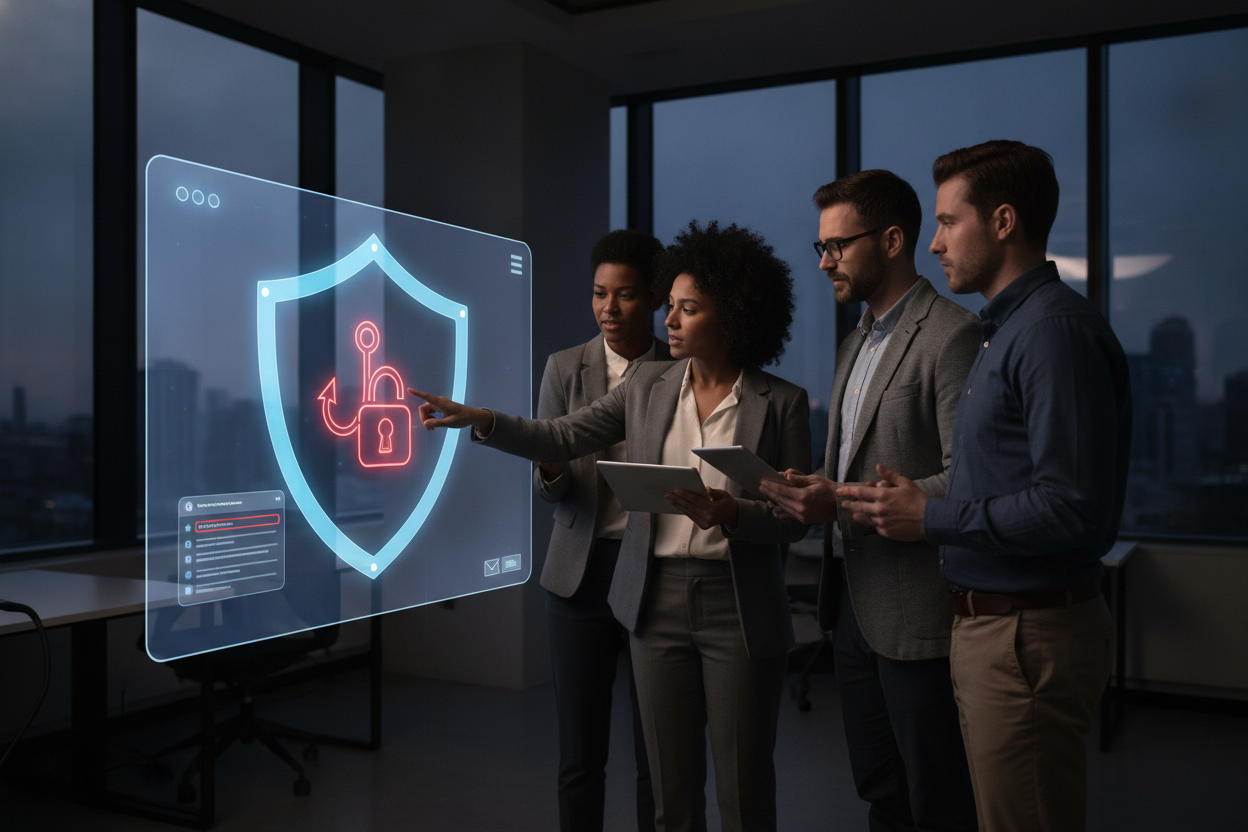
Phishing remains one of the most effective cyberattacks because it targets people, not just systems. A convincing email or message can trick even experienced employees into sharing credentials, approving payments, or opening malicious files. That is why phishing defense is a team effort, not just an IT responsibility.
The strongest defense begins with awareness. Employees should be trained to question urgent requests, check sender details, and verify unusual instructions through a second channel. Attackers often create pressure, fear, or false authority to push people into acting quickly. Teaching teams to pause and verify can stop many attacks before they succeed.
Technical controls also matter. Email filtering, multi-factor authentication, and browser protections can reduce exposure and limit the damage if someone clicks a bad link. Organizations should also use domain monitoring and lookalike detection where possible, since attackers frequently impersonate trusted brands. These tools work best when paired with a clear reporting process so employees know exactly what to do when something seems suspicious.
Regular simulations can make a major difference. When teams receive realistic phishing tests, they learn to spot warning signs in a low-risk environment. The goal is not to shame mistakes but to build better habits over time. Phishing defense is strongest when technology, training, and culture all support each other. In a fast-moving digital environment, that combination can protect data, reputation, and business continuity.
Leave a Reply